
How to Coordinate Executive Compensation With Your 401(k)
by Financial Design Studio, Inc. / June 6, 2025
The compensation packages that companies offer to senior executives can be great tools to save for retirement, build wealth, and optimize the taxes these executives pay. However, the complexity of these tools can sometimes result in them being underutilized or not used in a way that optimizes desired outcomes, such as saving on taxes. This article summarizes the major pieces of executive compensation, what their purpose is, what the typical challenges are, and how best to take advantage of the tool. We also link to our articles on each of these tools, which dive deeper into the nuts and bolts of how they work. The goal is to understand how to coordinate senior executive compensation with your 401(k) retirement account.
In no particular order we will cover:
- 401(k)s
- Mega Backdoor Roth Opportunity in 401(k)s
- Stock Options
- Restricted Stock Units (“RSUs”)
- Deferred Compensation
- Pensions
401(k) Plans
The most common and understandable benefit senior executives receive is being able to save into a 401(k) plan for retirement. Almost all executives understand the value of maxing out their contributions each year. This includes the normal salary deferral percentage of compensation and any age-based catchup contributions they are eligible for. The goal is to save as much money for retirement as possible.
Executives who find themselves in top income tax brackets typically make pre-tax 401(k) contributions, which helps lower their current tax bill. While this is a sound strategy, building up a large balance of pre-tax money in a 401(k) leaves savers with a new challenge: future Required Minimum Distributions (“RMDs”). As the IRS forces savers to take money out of their pre-tax retirement accounts, those savers have to pay income taxes.
For example, it’s not uncommon for a senior executive who’s diligently maxed out their 401(k)s to end up with a $2,000,000+ 401(k) balance by the time they retire. Based on current RMD laws, if that saver was born in 1960 or later, they would have to withdraw 4.00% of their pre-tax retirement savings starting at Age 75. Worse, this percentage increases each subsequent year, reaching 6.25% at Age 85 and 8.20% at Age 90.
Putting real numbers on this, the saver would have to pay taxes on $80,000 of income at Age 75, $125,000 at Age 85, and $164,000 at Age 90. Combined with Social Security income and (possibly) pensions, the saver’s total income and taxes may be well-above the cash they need to live on.
The best way to deal with this challenge is to make sure you’re running long-term savings and investment projections regularly. This way, you can spot potential issues with high future RMDs ahead of time and implement strategies to mitigate the issue – such as Roth Conversions.
Mega Backdoor Roth Strategy
The Mega Backdoor Roth Strategy is one that flies under the radar but is becoming a common offering in 401(k) plans. The strategy is best suited for senior executives who are looking to save more for retirement. Maxing out 401(k) salary deferrals is great, but can prove insufficient to cover desired living expense needs in retirement.
Mega Backdoor Roth strategies solve two major problems. First, they allow executives to put more into their 401(k) beyond salary deferrals. There are four “buckets” of money that can go into a 401(k) each year, but the total of these contributions cannot exceed a level that the IRS sets each year.

We’re familiar with salary deferrals, catchup contributions, and company matches. But many are unaware that some 401(k) plans allow after-tax contributions that can be converted to Roth. 401(k) plans that allow the Mega Backdoor Roth strategy can allow an executive to contribute up to twice as much to their 401(k) as they can with salary deferrals.
The other major benefit of the Mega Backdoor Roth strategy is that it creates a bucket of tax-free money in retirement. Withdrawals from a Roth 401(k) or Roth IRA are not taxed in retirement, creating a powerful tool for a retiree to manage their annual tax bill.
Making this strategy work means building extra contributions into your monthly budget. Telling a client to put another $20,000 into their 401(k) is easy to say, but it’s not chump change either. But the long-term benefits of doing so can provide the executive options for early retirement since they will invariably save more each year.
Stock Options
Companies that offer stock options do so to reward employees to create value for the company. “As we do well, you’ll do well.” Stock options come in different forms but ultimately try to accomplish the same goal. Options, such as NQSOs or ISOs, are best viewed as a *potential* wealth-building tool with an uncertain future value.
The unique challenges of building stock options into your financial plan is that the value and timing of the options is highly variable. Many times, option grants may be worth $0. In other cases, they may be worth hundreds of thousands of dollars. The value depends on the stock price of your employer’s stock. If they’re a private company, when liquidity events will unlock the option’s value. Tax planning for stock options is also critically important.
In positive outcomes, executives face deciding what to do with the wealth. The potential uses are limitless, but might include:
- Funding a large, current, goal such as buying a second home
- Paying for college education
- Saving for retirement
- Creating a savings bucket for potential early retirement
Given the unpredictable, potentially large, and tax complex nature of stock options it’s a good idea to have an ongoing relationship with a financial advisor that can give you advice “on the fly.” We regularly brainstorm “what if” scenarios with clients that have stock options. There’s always a roadmap of how to use any wealth that’s received from them.
Restricted Stock Units
Restricted Stock Units (“RSUs”) are stock-based compensation, like stock options, but with a more predictable value. We find RSUs to be more common than stock options for well-established companies. The goal of giving executives RSUs is to align their interests with the success of the company. Just like stock options!
The major benefit of RSUs is their realized value is relatively predictable in terms of value and cadence. A typical scenario is for a company to target an executive’s bonus to be a certain dollar amount, and then granting a portion of that bonus through an RSU grant. These share grants might have a 3-year vesting period. The executive will receive one-third of the stock grant in each of those three years. The great thing about RSU grants is that the executive knows the number of shares that will vest each year and the potential value of those shares.
The fundamental challenge with RSUs relates to taxes. When RSUs vest, companies will withhold a portion of the value to cover federal, state, Social Security, and Medicare taxes. But too often, we see the portion withheld for federal taxes to be too low. The executive might have the unfortunate surprise of owing tax when they file their taxes the following year. This is where diligent tax planning with a financial advisor can help a lot. We do tax planning in-house and will alert clients of the potentially higher tax bill ahead of time.
For planning, RSUs are an interesting dilemma. While their value is more predictable than stock options, it’s hard to treat their value on the same level as wages and bonuses as the value can go up and down with the stock price. But the regular nature of vesting RSUs means the executive likely sees some value from them each year. When working with executives with RSUs, we like to identify important savings goals. If you are saving for college or an early retirement, we will put vesting RSUs towards those goals.
Deferred Compensation
Deferred compensation is one of the most misunderstood executive compensation plans. It’s also very complex, rigid in its rules, and potentially risky. Companies offer deferred compensation plans to high-income senior executives as a way for them to defer paying taxes when their income is high.
While that sounds like a noble goal, executives need to understand what they’re getting into when they opt-in to these plans. The first challenge is that it’s hard to undo deferred compensation elections after they’re made. Yes, you can make changes, but many times making a change means delaying by five years when you can get your hands on that income. The IRS has very strict rules with these plans. This is because they’re giving the executive a tax benefit by allowing them to defer income to future years.
The other challenge is that money deferred into one of these plans is NOT guaranteed. Deferred compensation is an obligation of the company offering the plan. If they run into financial troubles, then the executive is at-risk of not receiving the salary they deferred. Realistically, this is a tiny risk for executives of large Fortune 500 companies, but it’s still a risk.
The planning strategies around deferred compensation usually revolve around lowering current tax burdens and creating an early retirement income stream. Money deferred today isn’t taxed at the federal or state level. It’s only taxed when received in the future, presumably when the executive’s tax rate is lower (i.e. in retirement.) Our planning with the executive may also include recommending to receive deferred compensation in a lump sum upon retirement or spread out over 5 or 10 years. Spreading the income out can be a nice transition into retirement as they still receive some income after they retire.
Pensions
Defined benefit pension plans have become less common over the last 25 years. But many executives today are still grandfathered into old plans. Pensions are valuable because they offer a semi-guaranteed income stream for the retiree over the course of their life. If they chose, it can even cover that of their spouse.
While they may seem relatively straightforward, pensions present a key challenge. Most plans will offer the executive one of two options: receive the value of their pension in a lump sum payment upon retirement, or elect a lifetime income stream. Deciding which option to choose may rely on what the math says (time value of money) or depend on the amount the executive has saved for retirement.
Much like deferred compensation, we find some clients that like the idea of receiving an income stream in retirement. It provides stability, and when combined with Social Security income, may end up covering a significant portion of their annual living expense needs in retirement. Others prefer the idea of getting their pension in a lump sum. This is so they can invest and use the funds as they wish.
How to Coordinate Executive Compensation with Your 401(k)
We’ve seen how different compensation can help an executive achieve different goals. 401(k)s and Mega Backdoor Roth strategies help executives save money for retirement. Stock options and RSUs are great wealth-building tools that can fund non-retirement goals. While deferred compensation and pensions help create a predictable income stream in retirement.
With all these strategies we’ve seen how important it is to consider the tax implications of these plans. When we work with executives, we want to avoid tax “surprises” as much as we can. You can’t avoid taxes completely, but can prepare and strategically pay taxes on terms most beneficial to you. A unique feature of Financial Design Studio is that we do multi-year tax planning in-house. Few advisors do that to the detail that we do it, all in-house by our team.
We help you coordinate and manage the complexities of these executive compensation plans. Our planning helps you map your finances out year-by-year into the future. And as you head into retirement, we show you how you’ll be able to maintain your living standards and ways to lower your lifetime tax burden. Schedule a free consultation with our team to see how you can get started!
Bonus: Our Retirement Planning Guide
Ready to take the next step?
Schedule a quick call with our financial advisors.


Recommended Reading

How do I Diversify My RSUs Before Retirement? [Video]
In this video, we explain how ESPPs, Blackout periods, and the Wash Sale rule all shape what you should do with RSUs before retirement.
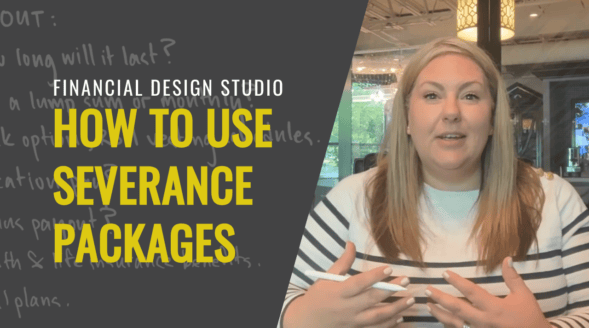
How to Use My Severance Package for Retirement [Video]
In this video we cover what to expect in a package, the option to negotiate, and how you can use your severance package for retirement.

Financial Design Studio, Inc.
We are financial advisors in Deer Park and Barrington, IL. A team with a passion for helping others design a path to financial success — whatever success means for you. Each of our unique insights fit together to create broad expertise, complete roadmaps, and creative solutions. We have seen the power of having a financial plan, and adjusting that plan to life. The result? Freedom from worrying about the future so you can enjoy today.